EXPLAINER
Why mining difficulty adjusts, and what it does to your returns
The difficulty adjustment keeps block times steady no matter how much hashrate joins. It is also the reason your break-even date keeps moving.

Quick answer
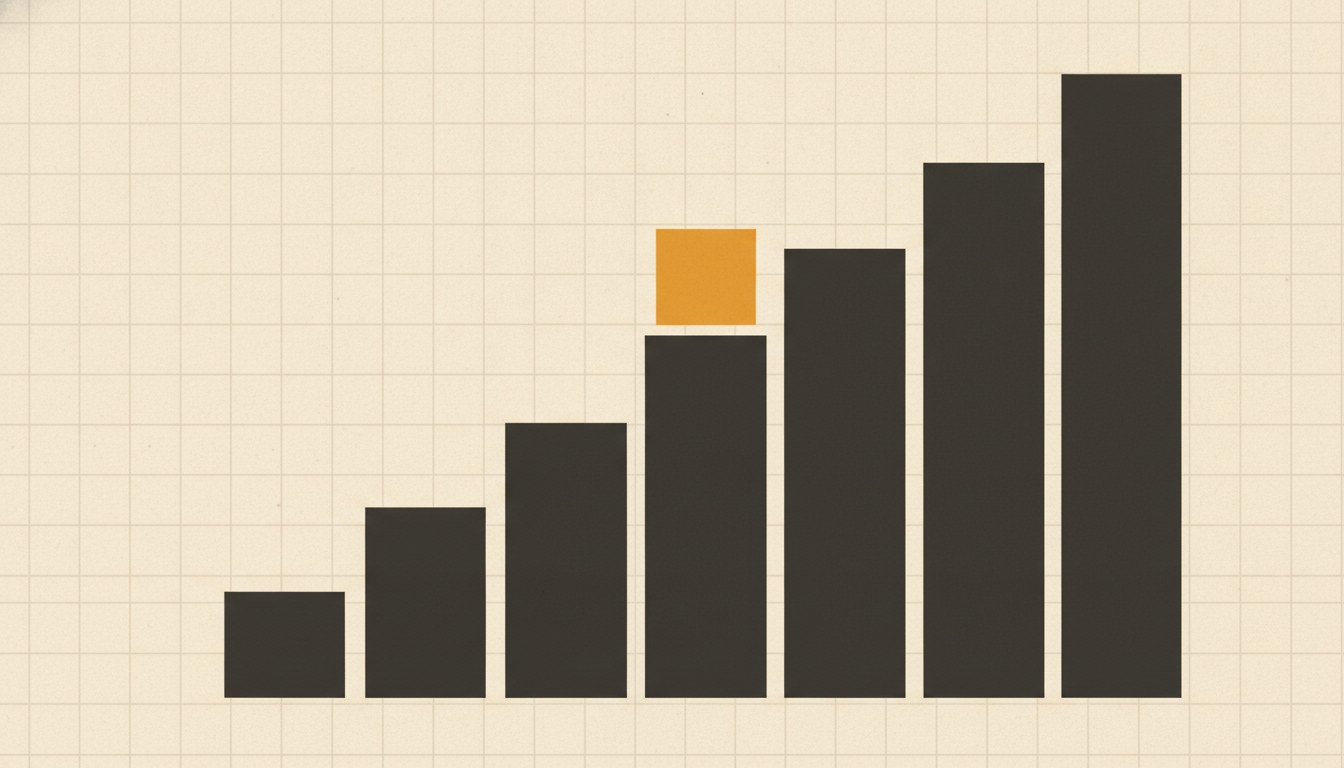
Difficulty retargets so blocks arrive at a steady rate regardless of total hashrate. Because hashrate has trended upward, your share of rewards shrinks over time even though your machine has not changed.
The difficulty adjustment is elegant, necessary, and the single biggest reason mining projections are optimistic.
What it does
Bitcoin targets one block every ten minutes. If more hashrate joins, blocks arrive faster; every 2,016 blocks the protocol measures how long that took and adjusts the target so the rate returns to ten minutes. More hashrate does not produce more coins — it divides the same issuance among more participants.
What that means for you
Your revenue depends on your share of the network, not your absolute hashrate. If the network grows and you do not, your share falls and your revenue falls with it, with no change to your machine or your power bill.
This is automatic dilution, and it is why a break-even date computed today is a best case. Every calculator, including ours, holds difficulty constant because forecasting it is guesswork — but the honest reading of the output is “if the network stops growing today”.
The other direction
It works both ways. When miners capitulate and hashrate falls, difficulty adjusts downward and the survivors earn more per unit of hashrate. This is the self-correcting mechanism that follows a halving, and it is why efficient miners can be profitable in exactly the conditions that force others offline.
Practical takeaway
When you model a purchase, do not just run today’s difficulty. Run it again with difficulty ten and twenty-five per cent higher and see whether the machine still makes sense. If it only works at today’s number, it does not work.
Related reading
- ASIC vs GPU mining: which one actually makes sense for you — ASICs win on efficiency and lose on flexibility. GPUs are the reverse. The right answer depends on which
- Mining profitability: the only four numbers that actually matter — Hashrate, efficiency, electricity price and network difficulty decide whether a miner pays. Everything else is noise. Here is
- What actually happens to miners after a halving — A halving cuts mining revenue in half overnight while costs stay identical. What follows is predictable in shape,
Key takeaways
- Difficulty keeps block time constant, not your revenue.
- Rising network hashrate dilutes you automatically.
- Every break-even estimate assumes this does not happen.
Risk notice
Mining returns depend on coin price, network difficulty, block reward and electricity cost, all of which change continuously. Figures here are a snapshot under stated assumptions, not a forecast. This is not financial advice.
Frequently asked questions
How often does Bitcoin difficulty change?
Every 2,016 blocks, roughly two weeks. Other chains use different intervals, some adjusting every block.
Does difficulty ever fall?
Yes, when hashrate leaves the network. Large downward adjustments have followed regional mining shutdowns and post-halving capitulation.